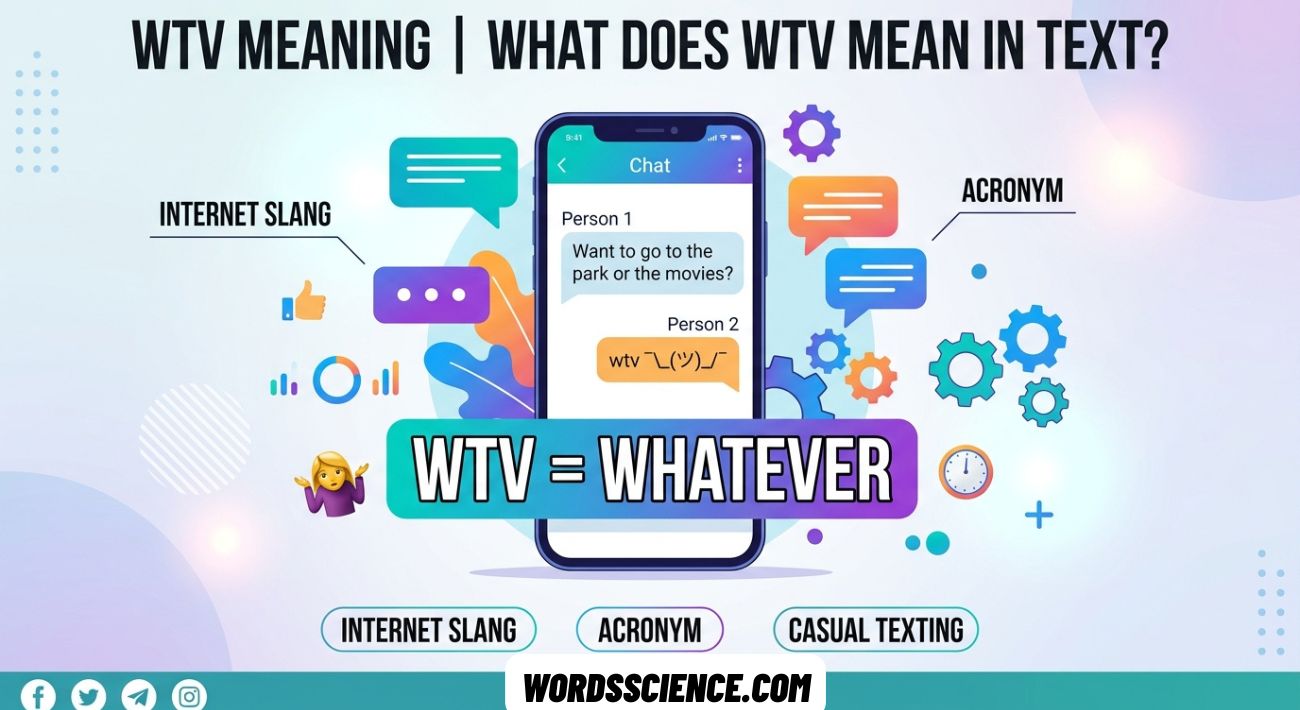
WTV Meaning | What Does WTV Mean in Text?
WTV Meaning usually refers to “whatever,” a common abbreviation used in casual texting and online chats. People use it to show that they have no strong preference, do not mind a choice, or want to move past a topic. The exact tone of WTV can change depending on the words and situation around it.
In text messages, WTV can sound friendly, neutral, playful, or dismissive depending on the context. A message like “WTV you want is fine” shows acceptance, while a short “WTV.” may sound annoyed or uninterested. This is why the WTV Meaning in Text is not always the same in every conversation.
This article explains What Does WTV Mean, how people use the abbreviation, and how its tone can change. You will also learn about WTV slang meaning, common examples, when to use WTV, and how to reply to WTV.
What Does WTV Mean?
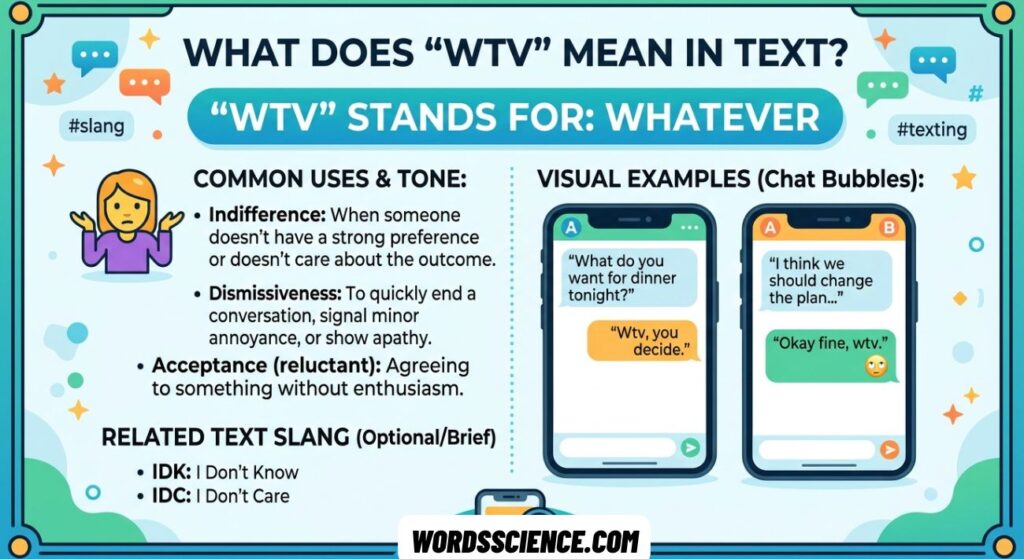
WTV usually means “whatever.” It is a common abbreviation used in texting, chats, and social media. People use it when they want to show acceptance, indifference, dismissal, or mild annoyance, depending on the situation.
For example, someone might text, “WTV, you can pick the movie,” to mean “Whatever, you can pick the movie.” In this case, the person accepts the other person’s choice. However, “WTV 🙄” can sound more dismissive or annoyed.
The WTV full form is “whatever,” and the WTV definition is generally connected to an attitude of not caring strongly about a choice or issue. Because it is informal, it fits casual communication much better than professional or formal writing.
WTV Slang Meaning in Text
The WTV slang meaning is simply “whatever,” but its exact tone depends on the conversation. In text messages, WTV can sound friendly, neutral, playful, annoyed, or dismissive.
Someone may use WTV to show that they are okay with any option. Another person may use it to end a disagreement or show that they do not want to continue the conversation. The words around the abbreviation, along with punctuation and emojis, often give clues about the intended tone.
For example, “WTV lol” may feel light and playful, while “WTV.” can sound short and uninterested. This is why the WTV meaning in texting cannot always be understood from the abbreviation alone.
How Context Changes the Meaning of WTV
The same abbreviation can communicate different feelings in different conversations. The relationship between the people, the topic, and the surrounding words all matter.
1. Casual acceptance
WTV can mean that someone is comfortable with whatever choice another person makes.
Person A: “Pizza or burgers?”
Person B: “WTV, I’m good with either.”
Here, WTV shows acceptance rather than annoyance. The person is saying that either option works for them.
2. Indifference
Sometimes WTV shows that a person does not have a strong opinion.
Person A: “Which color should I get?”
Person B: “WTV you like.”
In this context, the person is leaving the decision to someone else. The tone may be completely neutral if the conversation is relaxed.
3. Dismissiveness
WTV can also dismiss a topic or disagreement. This use can sound colder because the speaker may be signaling that they do not want to discuss the issue further.
Person A: “You should at least explain what happened.”
Person B: “WTV. I don’t want to talk about it.”
Here, WTV works as a form of dismissal rather than simple acceptance.
4. Mild annoyance
A short WTV can sometimes communicate irritation, especially after an argument.
Person A: “You never listen to me.”
Person B: “WTV 🙄.”
The abbreviation itself does not automatically mean someone is angry. The annoyed interpretation comes from the context, punctuation, emoji, and overall conversation.
See Also : Caveat Meaning | What Does Caveat Mean?
WTV Meaning on TikTok, Snapchat, Instagram, and Chats
The WTV meaning on social media is generally still “whatever.” People can use it in captions, comments, replies, direct messages, and casual conversations.
Text Messages
In ordinary texting, WTV is mainly used as a shortened form of “whatever.” It saves space and gives the message an informal tone.
Someone might write, “WTV you want is fine,” meaning “Whatever you want is fine.” In another conversation, “WTV” alone may signal that the speaker does not want to continue discussing something.
TikTok and Instagram
The WTV meaning on TikTok and WTV meaning on Instagram usually depends on the surrounding post or conversation. It may appear in comments, replies, captions, or direct messages.
For example, a person might comment “WTV 😂” after a funny disagreement between friends. In that setting, the abbreviation can feel playful rather than hostile.
Snapchat
The WTV meaning on Snapchat is also usually “whatever.” Because Snapchat conversations are often informal, the abbreviation can appear naturally in quick chats and replies.
A message such as “WTV, send me the address” may simply mean that the sender does not care about a previous choice and wants to move on.
Group Chats and Online Communities
In group chats and other online communities, WTV can quickly communicate that someone has no preference.
However, short messages can be harder to interpret without voice tone or facial expressions. A simple “WTV” may therefore seem more dismissive than the sender intended.
Real Conversation Examples
These examples show how the meaning can change even though the abbreviation stays the same.
1: Friends
Person A: “Want to watch a comedy or action movie?”
Person B: “WTV 😂 You choose.”
Meaning: The person does not have a preference and is letting their friend decide. The emoji also makes the message feel more relaxed.
2: Argument
Person A: “I tried to explain it to you.”
Person B: “WTV. I’m done arguing.”
Meaning: Here, WTV sounds dismissive. The speaker is showing that they do not want to continue the disagreement.
3: Group Chat
Person A: “Should we meet at 6 or 7?”
Person B: “WTV works for me.”
Person C: “Same.”
Meaning: WTV shows casual acceptance. The person is comfortable with either option.
Is WTV Rude?
WTV is not automatically rude. Its tone depends on the context and how it is written.
A message such as “WTV works for me” usually sounds neutral or casual. In contrast, “WTV.” sent during an argument may feel dismissive or annoyed.
Punctuation can also affect how a message feels. A period can make a very short response seem more serious or final, while an emoji can make it feel more playful. The relationship between the people matters too.
If you are talking with a friend who often uses texting slang, WTV may feel completely normal. In a formal conversation with a teacher, manager, customer, or professional contact, writing “whatever” or giving a clear response is usually more appropriate.
Is WTV Flirty?
WTV does not have a specific flirty meaning. It normally means “whatever,” and its tone depends on the conversation.
In a playful conversation between two people who like each other, WTV might be used jokingly. For example, “WTV, you pick the place 😏” could have a playful tone because of the context and emoji.
However, the abbreviation itself is not a romantic or flirtatious term. You should look at the full conversation rather than assuming WTV is flirty simply because someone uses it with you.
How to Reply to WTV
Your response can depend on whether the message sounds friendly, playful, or dismissive. A relaxed answer works well when the conversation is casual.
Friendly Replies
If WTV simply means “I don’t mind,” you can respond with a clear choice.
“Okay, I’ll pick!”
“Cool, let’s go with pizza.”
“Sounds good. I’ll decide.”
These replies keep the conversation moving without overthinking the abbreviation.
Funny Replies
If the conversation is playful, you can answer with humor.
“Wow, such a strong opinion 😂”
“Fine, I’m choosing for both of us.”
“WTV? That’s your final answer? 😂”
A funny response works best when the other person’s message already has a friendly tone.
When WTV Sounds Dismissive
If someone sends WTV during an argument, avoid assuming exactly what they mean. You can ask for clarification or respond calmly.
“Are you annoyed with me?”
“If you want to drop it, that’s okay.”
“I’d rather clear this up if something is bothering you.”
This approach is useful when the abbreviation seems colder than usual.
When to Use WTV
Use WTV mainly in informal communication with people who understand texting abbreviations and online slang. It can work well in friendly chats, group messages, social media conversations, and direct messages.
It is especially natural when you mean that you have no preference. For example, “WTV you want is fine” clearly tells someone that they can choose.
Before using it, consider the relationship and the situation. A short abbreviation can sometimes sound less friendly than a complete sentence, even when you did not intend it that way.
When to Avoid WTV
Avoid WTV when you need to sound formal, respectful, or especially clear. Professional emails, job applications, school assignments, customer communication, and serious discussions are usually better places for standard language.
You may also want to avoid WTV when someone is sharing something important or emotional. A response like “WTV” could make the other person feel that you are ignoring their concern.
When clarity matters, write “whatever,” “I don’t mind,” or a more specific response instead.
Common Mistakes About WTV
One common mistake is assuming that WTV always sounds rude. It can be neutral when someone simply has no preference.
Another mistake is assuming that WTV is always flirty, sarcastic, or annoyed. The abbreviation itself does not carry one fixed emotional meaning. Context, punctuation, emojis, and the rest of the conversation can change how it is understood.
People also sometimes confuse WTV with other texting abbreviations. WTV generally means “whatever,” while other short forms can communicate uncertainty, disagreement, or a desire to end a conversation.
Finally, remember that WTV is informal. It should not automatically replace clearer language in situations where tone and professionalism matter.
Similar Slang Terms
WTV belongs to a larger group of texting slang abbreviations and casual texting terms. Some related expressions have similar meanings, but they are not interchangeable in every situation.
| Term | Common meaning | Main difference |
|---|---|---|
| WTV | Whatever | Shows indifference, acceptance, or dismissal |
| IDC | I don’t care | More directly expresses lack of concern |
| IDK | I don’t know | Shows uncertainty or lack of knowledge |
| NVM | Never mind | Often means to forget or disregard what was just said |
WTV vs IDC: WTV can mean “whatever” or “any choice is fine,” while IDC more directly says “I don’t care.” Depending on context, both can sound dismissive.
WTV vs IDK: WTV usually concerns a lack of preference or interest, while IDK means the person does not know the answer.
WTV vs NVM: WTV usually responds to a choice, opinion, or issue. NVM often tells someone to disregard an earlier question or statement.
Understanding these differences makes it easier to interpret WTV on social media and in everyday chats.
WTV Meaning: Quick Recap
WTV means “whatever.” It is an informal abbreviation commonly used in texting, social media, group chats, and direct messages. Depending on the context, it can express acceptance, indifference, dismissal, or mild annoyance.
The WTV meaning comes from the conversation around it, not just the three letters. Friendly wording may make it sound casual, while a short “WTV.” during an argument may sound dismissive. When you understand the context, punctuation, emojis, and relationship between the speakers, you can usually tell what the sender intended.
What Is the WTV Full Form?
WTV stands for “whatever.” It is a short texting abbreviation used in casual conversations, social media, and online chats when someone wants to express a lack of preference or concern.
The WTV full form can sound neutral, playful, or dismissive depending on the context. For example, “WTV you want is fine” sounds accepting, while “WTV.” during an argument may sound annoyed or uninterested.
WTV Meaning in Casual Communication
WTV is common in casual communication because it makes a message shorter and more relaxed. Friends may use it when discussing plans, choices, opinions, or everyday topics.
The meaning can change with the speaker’s tone and context. Emojis, punctuation, and the rest of the conversation can help show whether WTV is friendly, playful, or dismissive.
WTV Meaning Online
The WTV meaning online is generally “whatever.” You may see it in social media comments, direct messages, group chats, and other informal online conversations.
People often use WTV when they want to show indifference or accept another person’s choice. However, a very short reply can sometimes be misunderstood, so the surrounding conversation matters.
What Does WTV Mean in Texting?
WTV in texting usually means “whatever.” Someone may use it to say they have no preference, do not want to argue, or simply do not care about the choice being discussed.
For example, “WTV, you choose” usually means the sender is happy for the other person to decide. In contrast, “WTV, I’m done talking” can show dismissal or annoyance.
FAQs
What does WTV girl mean?
WTV from a girl usually means “whatever,” showing indifference, acceptance, or mild annoyance depending on context.
What does WTV mean?
WTV means “whatever” in casual texting, chats, and social media.
How to respond to WTV in text?
You can respond by choosing an option, joking back, or asking if something is bothering them.
What does WTW mean from a girl?
WTW usually means “what’s the word?” or “what’s the move?” depending on the conversation.
Final Thoughts
WTV Meaning usually refers to “whatever,” an informal abbreviation used in texting, chats, and social media. It can show that someone has no preference, accepts a choice, or does not want to focus on a topic. The exact meaning can shift with the conversation, punctuation, emojis, and relationship between the people.
In casual messages, WTV may sound friendly, neutral, playful, annoyed, or dismissive. A phrase like “WTV you want is fine” sounds accepting, while “WTV.” during an argument may sound colder. The best way to understand What Does WTV Mean is to consider the full message instead of the abbreviation alone. When using WTV, match the tone to the situation and choose clearer wording when formality matters in serious conversations.