
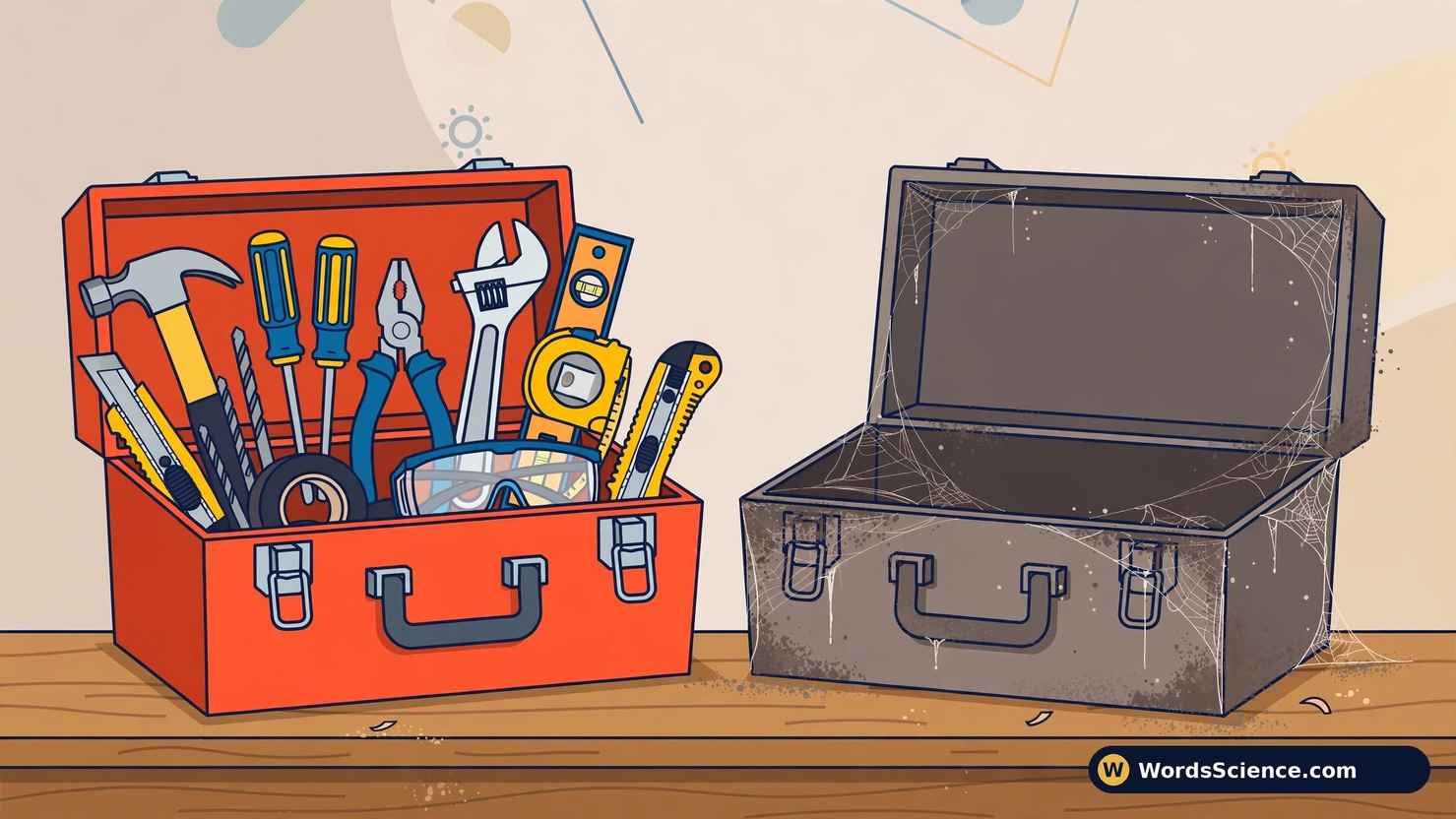
Opposite of Useful: Useless and Other Antonyms Explained
The main opposite of useful is useless. Something useful helps you do a job or reach a goal; something useless cannot help at all. Students meet this pair in everyday phrases like “a useful app” and “a useless app.”
Useful has more than one antonym, though. Words like pointless, ineffective, and impractical also stand against it, but each one attacks a different side of the word: purpose, results, or practicality.
This guide explains each real opposite in simple words: what it means, how strong it is, and how to choose the right one for everyday speech, school work, and formal writing.
Why the Opposite of Useful Matters
Students and teachers use these words in essays and exam answers to judge what works and what does not. “The method was useless” is clear — but if the real problem was waste or no results, inefficient or unproductive is the fair, precise word.
Writers and ESL learners also need this choice. The opposites of useful are not all equal: unhelpful is mild, worthless is harsh, and counterproductive means something even worse than useless. Learning these strength differences makes English natural and exact.
What Does Useful Mean?
Useful is an adjective with three main senses. First, helpful, serving a purpose: a useful knife cuts well. Second, practical, working well in real life: a useful design is easy to use daily. Third, effective, producing good results: a useful study method raises your marks.
So the opposite changes with the sense: no purpose — useless; cannot work in real life — impractical; no result — ineffective. The words below are grouped by sense, and the strongest group — actual harm — comes last.
Opposites of Useful That Mean “No Help, No Purpose”
Useless – The Direct Opposite
Useless means having no use or purpose at all: it cannot help you do anything. It is the direct antonym of useful and fits objects, tools, ideas, and advice. It is strong and blunt — more serious than “not very useful.”
Example: A knife with a broken blade is useless for cutting bread.
Pointless – No Reason to Do It
Pointless means having no purpose or reason, so nothing is gained by it. It fits actions, talks, and meetings, not physical tools: a pointless meeting wastes time, while a useless tool cannot do its job.
Example: Arguing about the old mistake now is pointless, because the plan has already changed.
Unhelpful – The Mild Everyday Opposite
Unhelpful means not giving help or support when help is needed. It is the mildest opposite in this list, mostly for people, answers, and instructions, not things.
Example: The instructions were unhelpful, so we watched a video to learn the steps.
Worthless – No Value at All
Worthless means having no value at all. It is stronger and harsher than useless, because it judges value, not function: a thing can be useless for one job but still have value, while a worthless thing has none. Be careful using it about people — it sounds rude.
Example: Fake money is worthless because no shop will accept it.
Opposites of Useful That Mean “Not Practical”
Impractical – Good on Paper, Bad in Real Life
Impractical means not sensible or workable in a real situation, even when the idea sounds good in theory. It opposes the “practical” sense of useful and fits plans, designs, clothes, and ideas: an impractical plan may be clever, but nobody can really use it.
Example: High heels are impractical for a long walk in the mountains.
Inefficient – It Works, but It Wastes
Inefficient means working in a way that wastes time, money, or energy. Here is the honest difference: an inefficient thing can still be useful, because it does the job — just badly, and with waste. So inefficient is only a partial opposite: it opposes the “works well” sense, not the “has a purpose” sense.
Example: The old machine is inefficient because it uses twice as much electricity as a new one.
Opposites of Useful That Mean “No Results”
Ineffective – It Does Not Work
Ineffective means not producing the result something was meant to produce. It opposes the “effective” sense of useful, and it fits methods, medicine, rules, and plans.
Example: The cheap glue was ineffective, and the two pieces fell apart in an hour.
Unproductive – Time Spent, Nothing Made
Unproductive means not producing good results or useful work. It describes time, meetings, days, and land rather than single tools — time that passes with nothing to show for it.
Example: We had an unproductive afternoon because the computers were down for three hours.
Futile – For Efforts That Cannot Succeed
Futile means certain to fail, with no hope of a useful result. It is used for efforts and attempts, not for objects — you can call an attempt futile, but not a hammer. It is a little formal, and stronger than ineffective: it says success was never possible.
Example: Trying to dry the floor while the pipe was still leaking was futile.
Fruitless – For Efforts and Searches With No Result
Fruitless means producing no good result after effort or trying. Like futile, it belongs to efforts, attempts, and searches, not objects. The difference is small: a fruitless search finished with nothing found, while a futile effort could never have worked at all.
Example: After a fruitless search of every drawer, she found the keys in her coat pocket.
Stronger Than Useless: Opposites That Mean Real Harm
These words go one step past “does not help” — they make your situation worse.
Counterproductive – It Pushes You Backwards
Counterproductive means having the opposite effect from the one you wanted, so your goal becomes harder to reach. Stronger than useless: a useless step takes you nowhere, but a counterproductive step pushes you backwards. It fits actions, rules, and habits.
Example: Shouting at the team was counterproductive, because everyone stopped trying.
Detrimental and Harmful – Worse Than Useless
Detrimental means causing harm or damage (formal). Harmful is its everyday partner with the same meaning. Both go beyond useless: instead of merely failing to help, they actively damage health, progress, or results.
Example: Too much sun without protection is harmful to your skin.
Opposite of Useful at a Glance
| Opposite | Simple Meaning | Best Used For |
|---|---|---|
| Useless | Having no use or purpose at all | The direct opposite; tools, objects, ideas |
| Pointless | Having no purpose or reason | Actions, meetings, arguments |
| Unhelpful | Not giving help when help is needed | People, answers, instructions (mild) |
| Worthless | Having no value at all | Money, objects, information (stronger) |
| Impractical | Not workable in a real situation | Plans, designs, clothes, ideas |
| Inefficient | Works, but wastes time, money, or energy | Machines, systems, methods (partial opposite) |
| Ineffective | Not producing the result it should | Methods, medicine, rules |
| Unproductive | Producing no good result or work | Time, meetings, days, land |
| Futile | Certain to fail, with no hope of success | Efforts and attempts (formal) |
| Fruitless | Producing no result after effort | Searches, attempts, talks (formal) |
| Counterproductive | Producing the opposite of the wanted effect | Actions, rules, habits (stronger) |
| Detrimental / Harmful | Causing harm or damage | Health, progress, results (stronger; formal / everyday) |
How to Choose the Right Opposite of Useful

Start with the sense of useful you mean. No purpose? Choose useless or pointless. Cannot work in real life? Choose impractical. Works but wastes? Choose inefficient. Gives no result? Choose ineffective or unproductive. An effort that cannot succeed? Choose futile or fruitless. Makes things worse? Choose counterproductive, detrimental, or harmful.
Then check the strength ladder. Unhelpful is mild and polite. Useless is the direct, general opposite. Worthless is stronger, because it says a thing has no value at all. Counterproductive and detrimental are the strongest of all: real damage, not just a missing benefit.
Learn one famous test for the pair students mix up most: a heater that never warms the room is ineffective — no result. A heater that warms the room but burns far too much fuel is inefficient — a result, but with waste. Remember the heater, and you will never confuse the two.
One grammar tip: all of these words are adjectives, just like useful itself, so they fit the same sentence patterns — “a useful tool,” “a useless tool.”
Words That Are Not True Opposites of Useful
Some words look like opposites but are not exact. Redundant means more than is needed because something else already does the same job. A redundant tool may work perfectly well — the problem is duplication, not failure.
Obsolete means no longer used because something newer has replaced it. An obsolete phone was useful in its time, and it may still work today. Its true partner is “modern,” not “useful,” so honest word lists keep it out of the antonym list.
Optional means you may choose something or not choose it. It says nothing about value at all: an optional extra lesson can be very useful, and a required lesson can be useless. Optional answers the question “must I?” — not the question “does it help?”
Broken describes a damaged state, not an opposite. A broken tool is useless today, but it can be repaired and become useful again; a truly useless thing has no use even in perfect shape. Broken tells you a thing’s condition, not its value or purpose.
Opposites are only one part of strong English. Slow down and enjoy gentle comparisons in similes for slow, then compare a close cousin of this topic, the opposite of benefit.
Frequently Asked Questions
What is the main opposite of useful?
The main opposite of useful is useless. It means having no use or purpose at all, and it fits almost every sentence.
What is the difference between ineffective and inefficient?
Ineffective means no result: the thing does not do what it was meant to do. Inefficient means a result with waste: the thing works, but uses too much time, money, or energy.
Is “worthless” stronger than “useless”?
Yes. Useless says a thing has no use for a job, while worthless says it has no value at all. Worthless is the harsher word, so never use it about a person.
What is the opposite of useful for efforts and attempts?
For efforts and attempts, use futile when the effort could never succeed, and fruitless when trying finished with no result. These two words describe actions, not objects.
Is “broken” an antonym of useful?
Not exactly. Broken is a state, not an opposite: a broken tool can be repaired and become useful again. The true antonym of useful is useless, with pointless, ineffective, and impractical for more exact meanings.
Conclusion
Remember one main word and one simple map. The main opposite of useful is useless, the safe, general choice. Around it stand purpose words like pointless and unhelpful, practicality words like impractical and inefficient, results words like ineffective, unproductive, futile, and fruitless, and the stronger-than-useless words counterproductive, detrimental, and harmful.
Choose by sense and by strength: which side of useful do you mean — purpose, practicality, or results — and how bad is the failure? To see how thinkers weigh usefulness itself, read the encyclopedia article on utility and how people judge the value of things.