Idioms for Flowers: Meanings, Examples, and How to Use Them
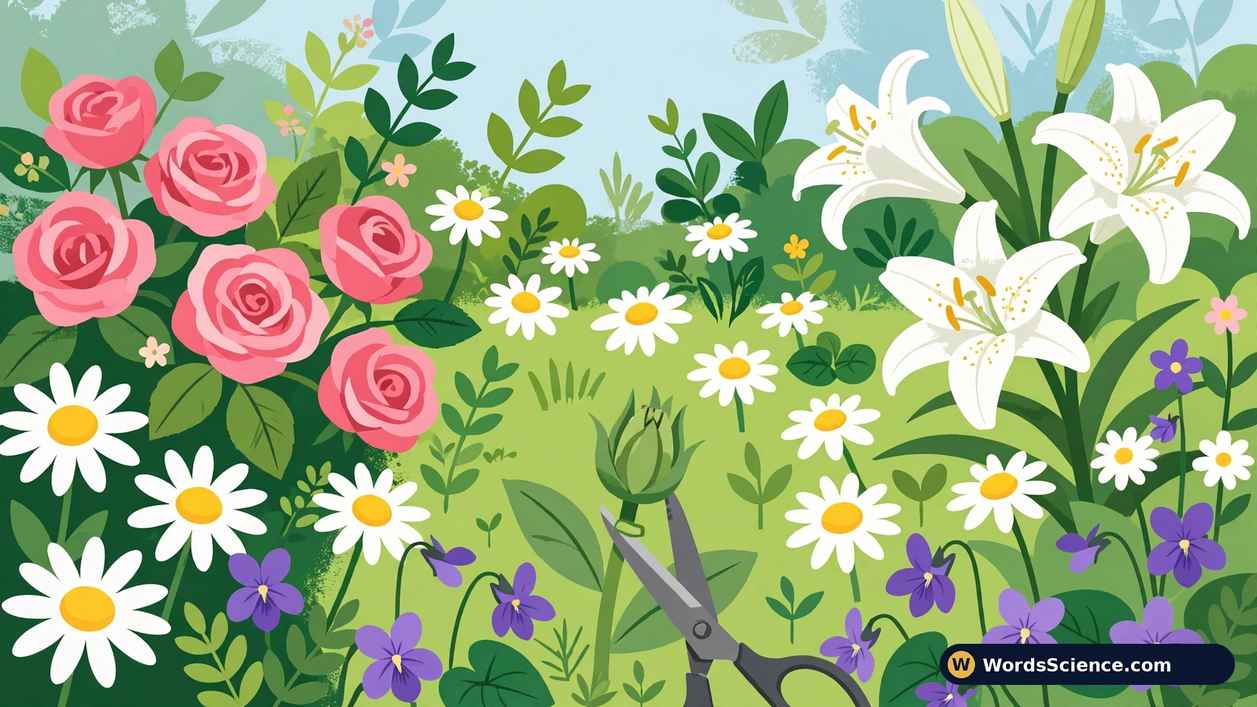
The best-known idiom about flowers is “nip it in the bud.” An idiom is a common expression whose real meaning is different from the meaning of its single words. When we tell someone to nip a problem in the bud, no real garden is involved — we mean stop the problem while it is still small.
English has many flower idioms like this. Some use roses, some use daisies and violets, and others use the ideas of buds and blooming. Each one paints a small picture that is easy to remember.
This guide collects 13 real idioms for flowers. You will learn what each idiom means, see a simple example sentence, and learn which ones are safe in school essays and which ones are jokes for friends.
Why Idioms for Flowers Matter
Students and teachers meet idioms in stories, poems, and English exams. A reader who takes every word at face value will be lost when a story says a girl was “a late bloomer.” Knowing the figurative language of flowers helps students understand texts faster and answer questions with confidence.
Writers and ESL learners use idioms to sound natural. Plain sentences are correct, but a well-chosen idiom adds colour and feeling. Idioms about flowers are especially useful because gardens and seasons are familiar in almost every country, so the pictures they paint are easy to share.
What Is an Idiom?
An idiom is a fixed group of words with a special meaning that you cannot guess from the words alone. “In full bloom” is not only about a real plant with open flowers. It can also describe a career, a friendship, or a business at its best and most beautiful point.
Most flower idioms come from gardens and farm life, where people watched buds, blooms, and thorns every day for hundreds of years. That is why so many of them are about growing, starting early, stopping early, beauty, and hidden pain.
Idioms About Buds and Blooming
Buds and blooms give English its idioms about beginnings, growth, and success.
Nip (Something) in the Bud
To nip something in the bud means to stop a problem at the very start, before it grows bigger, like cutting a young bud so the plant cannot grow. It is an everyday idiom that is safe everywhere, including formal writing. Example: The teacher nipped the noise in the bud by moving the two boys to different desks.
A Late Bloomer
A late bloomer is a person who develops skills, beauty, or success later than other people, like a flower that opens late in the season. It is a kind, everyday idiom. Example: Hassan was a late bloomer who struggled at school but became a fine engineer at thirty.
In Full Bloom
In full bloom means at the best, most beautiful, or most successful stage, fully developed. People use it for real flowers and for careers, businesses, and talents. Example: By June, her small bakery was in full bloom, with customers waiting at the door every morning.
Bloom Where You Are Planted
Bloom where you are planted is a modern saying that means be happy and do your best in the place and situation you are in now. It is friendly advice, not an old idiom. Example: When Sara moved to a small village school, her grandmother told her to bloom where she was planted.
Idioms About Roses

The rose is the most famous flower in English, so it gives us idioms about beauty, luck, secrets, and hidden pain.
A Bed of Roses
A bed of roses is a comfortable, easy situation with no problems. People mostly use it in the negative form, “not a bed of roses,” to say that something is harder than it looks. Example: Life with three small children is no bed of roses, but Maria would not change it.
Everything Is Coming Up Roses
Everything is coming up roses means everything is going very well and luck is on your side. It is a cheerful, everyday idiom. Example: First the new job, then the exam results — everything is coming up roses for Tom this year.
Rose-Tinted Glasses
To see things through rose-tinted glasses (also called rose-coloured glasses) means to see only the good side of something and ignore its problems. Example: He looks at his old school through rose-tinted glasses and forgets the cold classrooms and strict rules.
Every Rose Has Its Thorn
Every rose has its thorn is a proverb. It means every good and beautiful thing also has a painful or difficult part. Example: The new house is lovely, but the roof leaks — every rose has its thorn.
Under the Rose
Under the rose means in secret, said or done privately. It is an older, formal expression that comes from the Latin words sub rosa. Example: The plan was discussed under the rose, and nobody outside the room heard a word about it.
Idioms About Daisies, Lilies, and Violets
Smaller flowers give us idioms about freshness, shyness, beauty, and even jokes about death.
Fresh as a Daisy
Fresh as a daisy means full of energy and looking healthy and bright, usually after sleep or rest. It is a friendly, everyday expression. Example: After a good night’s sleep, Grandpa woke up fresh as a daisy and asked for a big breakfast.
A Shrinking Violet
A shrinking violet is a very shy person who does not like attention and stays quiet in a group. It is a gentle, everyday idiom. Example: Do not ask Lena to sing in front of everyone; she is a real shrinking violet.
Gild the Lily
To gild the lily means to try to improve something that is already beautiful, and to spoil it by adding too much. The phrase grew out of a famous line by Shakespeare about painting a lily. Example: The dress was perfect already, and the heavy gold belt only gilded the lily.
Pushing Up Daisies
Pushing up daisies is a humorous way to say that someone is dead and buried, with daisies growing over the grave. It is informal and joking, so never use it about a real death in a serious moment. Example: “If I eat one more plate of this food, I will be pushing up daisies,” joked Uncle Ray.
Idioms for Flowers at a Glance
| Idiom | Simple Meaning | When People Use It |
|---|---|---|
| Nip something in the bud | Stop a problem at the start | Everyday and formal writing |
| A late bloomer | A person who succeeds later than others | Talking about people and talent |
| In full bloom | At the best and fullest stage | Careers, businesses, real gardens |
| Bloom where you are planted | Do your best where you are now | Friendly advice (modern saying) |
| A bed of roses | An easy, comfortable situation | Mostly in “not a bed of roses” |
| Everything is coming up roses | Everything is going very well | Happy news and good luck |
| Rose-tinted glasses | Seeing only the good side | Talking about unrealistic views |
| Every rose has its thorn | Every good thing has a bad part | Giving balanced advice (proverb) |
| Under the rose | In secret | Older, formal speech |
| Fresh as a daisy | Full of energy after rest | Friendly everyday talk |
| A shrinking violet | A very shy person | Describing quiet people |
| Gild the lily | Spoiling beauty by adding too much | Fashion, art, and design |
| Pushing up daisies | Dead and buried | Jokes among friends only |
How to Use Flower Idioms in Writing and Speaking
- Choose safe idioms for school essays. “Nip in the bud,” “a late bloomer,” “a bed of roses,” and “in full bloom” are clear, polite, and understood by almost everyone.
- Save friendly idioms for stories and talk. “Fresh as a daisy” and “everything is coming up roses” sound warm in letters, stories, and conversation.
- Use humour with care. “Pushing up daisies” is a joke about death. It is fine among friends, but it would be rude at a real funeral or in sad news.
- Learn each idiom as a whole phrase. Never translate an idiom word for word into another language. The word-for-word translation usually makes no sense at all.
- Use one idiom at a time. One clear idiom is stronger than three in a single sentence. Too many make your writing sound like a flower shop.
Expressions That Are Not Flower Idioms
Some flower phrases look like idioms but are not. “Flower power” is a historical slogan from the peace movement of the 1960s, not an everyday idiom, and it sounds strange in a school essay. Single words are vocabulary, not idioms: a “wallflower” is one word for a shy person who stands at the side at parties, and a “florist” is simply a person who sells flowers. Plain descriptions like “a bunch of roses” are also not idioms — they are just literal words about real flowers.
Idioms are only one part of lively English. Keep learning how word meanings change with the opposite of serious guide, then learn the real plant words in the science words that start with F list.
Frequently Asked Questions
What does “nip it in the bud” mean?
It means to stop a problem at the very start, before it grows bigger. The picture comes from cutting a young bud off a plant so that it cannot grow.
What is a flower idiom?
A flower idiom is a fixed expression that uses a flower, a bud, or blooming to mean something else. For example, “a late bloomer” means a person who becomes successful later than others.
What does “a bed of roses” mean?
It means an easy and comfortable situation. People mostly use it in the negative form: “Life is not a bed of roses,” which means life is not always easy.
Can I use flower idioms in a school essay?
Yes, polite idioms like “nip in the bud” and “a late bloomer” are safe in essays. Avoid jokes like “pushing up daisies” in serious writing, because it makes fun of death.
What does “gild the lily” mean?
It means trying to improve something that is already beautiful, and making it worse by adding too much. A plain cake with one cherry is fine; ten cherries would gild the lily.
Conclusion
You now have 13 flower idioms, from buds and blooms to roses, daisies, lilies, and violets. Each one turns a small garden picture into a meaning about people, luck, secrets, beauty, and feelings.
Practise with one idiom at a time: learn it as a whole phrase, use it in a sentence about your own life, and it will soon come naturally when you speak and write. To learn more about how these fixed phrases work, read the encyclopedia article on idiom.