Opposite of Calm: Anxious, Agitated and Other Antonyms Explained
The most common opposite of calm is anxious. A calm person is quiet, relaxed, and not worried, while an anxious person feels worry and cannot settle. Students meet this pair in everyday phrases like “stay calm” and “calm down.”
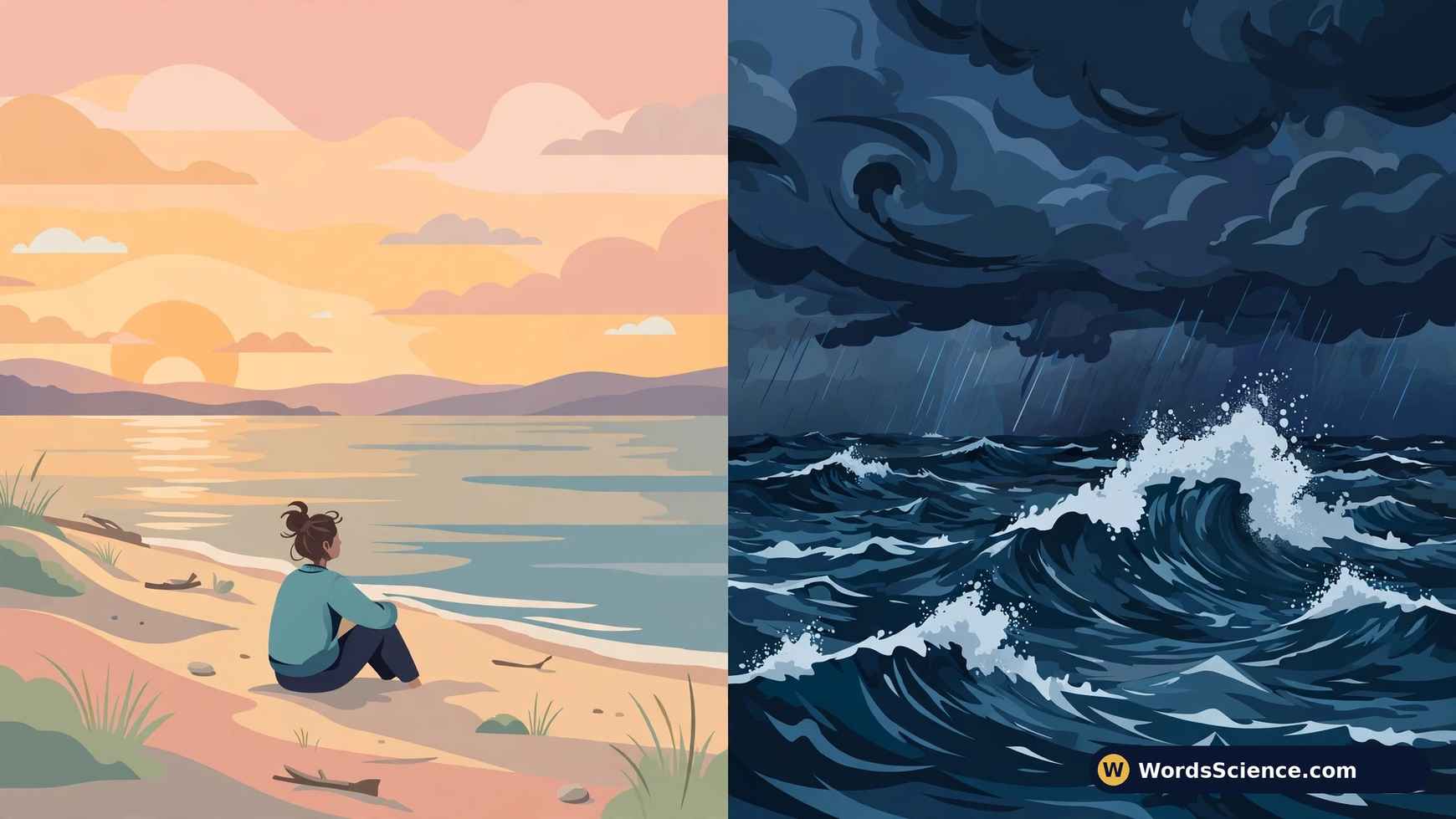
Calm has more than one antonym, though — and no single word fits every sentence. Calm describes a person’s feelings, the weather, and water, so the best opposite changes with the picture. Nervous, agitated, and panicked oppose calm feelings, while stormy, turbulent, and rough oppose calm weather and calm seas.
This guide explains each real opposite, grouped by where it fits best. You will learn each word’s meaning, its strength, and how to choose the right one for people, places, weather, and the sea.
Why the Opposite of Calm Matters
Students and teachers use these words in stories, essays, and exam answers, where feelings and settings must be described clearly. Writing that a character felt “not calm” is weak. Writing that she felt nervous before the test and panicked during it tells the reader exactly how she felt.
Writers and ESL learners need the same care for mental health topics, news reports, and everyday talk. Words like stress and anxiety appear in health advice everywhere, and choosing between rough seas and a chaotic office makes English sound natural and precise.
What Does Calm Mean?
First, let us see the word itself clearly. Calm works as an adjective, a noun, and a verb, and it describes three different things.
First, calm describes a person’s feelings: quiet, relaxed, and not worried. A calm teacher speaks slowly and does not get angry. Second, calm describes the weather: no strong wind, no storm, no heavy rain. Third, calm describes water: a calm sea is smooth and flat, with small waves or no waves at all. As a verb, to calm someone means to help them relax, and the noun calm means a peaceful state, as in “the calm before the storm.”
Because calm has three homes — feelings, weather, and water — its opposites live in different places too. The words below are grouped by context, so you can pick the one that matches your sentence.
Opposites of Calm for Feelings
Anxious – The Main Opposite for Feelings
Anxious means worried and unable to relax, usually about something bad that might happen. It is the truest and most common opposite of calm for a person’s feelings, and it fits health writing, everyday speech, and school work.
Example: She felt anxious all night before the exam results came out.
Nervous – Worried Before One Event
Nervous means worried or a little frightened about something that is about to happen, like a test, a speech, or a first day at work. It is milder and shorter than anxious: the feeling often ends when the event ends.
Example: He was nervous before his first driving lesson, but his hands stopped shaking after ten minutes.
Stressed – Under Too Much Pressure
Stressed means feeling worried and tired because there is too much work, too many problems, or too little time. It is the modern everyday opposite of calm in work and study life. Inside, a stressed person feels no relaxation at all.
Example: After three weeks of night shifts, the nurse felt tired and stressed.
Agitated – Stronger, Restless and Upset
Agitated means so worried or upset that you cannot sit still or think clearly. It is stronger than anxious, and it often shows in the body: walking up and down, speaking fast, moving your hands again and again. It is a true opposite of calm, but save it for strong feelings.
Example: The agitated passenger kept walking up and down the platform.
Excited – The Energy Opposite
Excited means full of energy and strong feeling, unable to sit quietly — but the feeling is usually happy. It opposes calm in energy, not in mood: a calm child sits and reads, while an excited child jumps and shouts.
Example: The excited children ran around the garden, too happy to sit down for lunch.
Panicked – The Strongest Opposite
Panicked means suddenly filled with fear, so strongly that you cannot think or act in a clear way. It is the strongest opposite of calm feelings on this list, and news reports use it for crowds and emergencies.
Example: When the fire alarm rang, a few panicked students ran for the door without their bags.
Opposites of Calm for Weather, Water and Situations
Stormy – The Opposite of Calm Weather
Stormy describes weather with strong wind, heavy rain, and often thunder. It is the direct opposite of a calm day, and weather reports use it every day.
Example: After a calm morning, the weather turned stormy and the fishing boats stayed in the harbour.
Turbulent – Rough Air and Troubled Times
Turbulent means moving wildly and without control. Pilots use it for rough air that shakes a plane, and writers use it for troubled times in history or business.
Example: The plane shook hard in the turbulent air above the mountains.
Rough – The Opposite of a Calm Sea
A rough sea has big, strong waves that push boats up and down. It is the standard, exact opposite of a calm sea in shipping, fishing, and travel writing.
Example: The ferry did not sail because the sea was too rough for the crossing.
Chaotic – The Opposite of a Calm Situation
Chaotic means in total disorder, with no control and no clear plan. It opposes calm in rooms, offices, streets, and events: a calm office is quiet and organised, while a chaotic one is full of noise and confusion. Chaotic describes a situation, not one person’s feelings.
Example: The station was chaotic after all the trains were cancelled at once.
Opposite of Calm at a Glance
| Opposite | Simple Meaning | Best Used For |
|---|---|---|
| Anxious | Worried and unable to relax | Feelings; the safest general opposite |
| Nervous | Worried about something that is about to happen | Feelings before tests, speeches and events |
| Stressed | Worried and tired under too much pressure | Work, study and everyday life |
| Agitated | Restless and upset, unable to sit still | Strong feelings; news and health writing |
| Excited | Full of happy energy, unable to sit quietly | Children, celebrations and good news |
| Panicked | Filled with sudden fear, unable to think clearly | Emergencies; the strongest feeling opposite |
| Stormy | Windy, rainy weather, often with thunder | Weather reports; angry meetings |
| Turbulent | Moving wildly, with no control | Rough air, rough seas and troubled times |
| Rough | Having big, strong waves | The sea; shipping and travel |
| Chaotic | In total disorder, with no clear plan | Rooms, offices, streets and events |
How to Choose the Right Opposite of Calm
Start with the context. If you are writing about a person’s feelings, choose from the feelings group above. If you are writing about the weather, choose stormy or turbulent. For the sea, the natural opposite is rough: sailors and weather reports pair “calm seas” with “rough seas.” For a room, an office, or a street, choose chaotic.
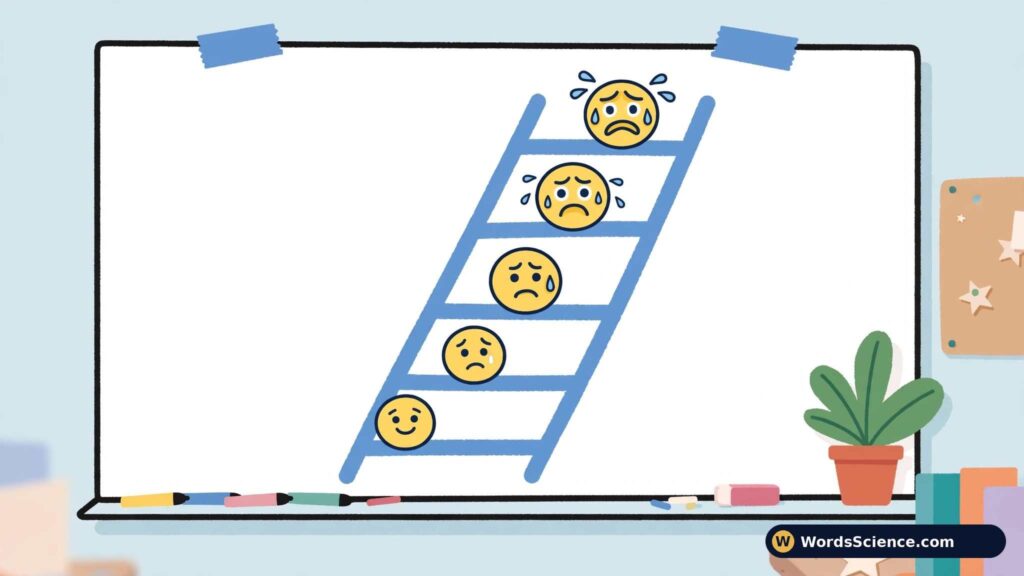
Then think about strength. For feelings, the ladder runs like this: nervous is the mildest step, a short worry before one event. Anxious is the middle step, a worry that stays in the mind. Stressed adds pressure and tiredness. Agitated is stronger and shows itself in restless movement. Panicked is the top of the ladder, where fear takes full control. Picking the right step keeps your writing honest: a student before a small quiz is nervous, not panicked.
One more tip: use the fixed partners English speakers expect. They pair “calm and peaceful” with restless, troubled feelings, “calm seas” with rough seas, and “calm weather” with stormy weather.
Words That Are Not True Opposites of Calm
Busy is the most common near-miss. Busy describes activity — having a lot to do — not a feeling. A busy person can be perfectly calm, working through tasks without any worry. Busy is the opposite of “free” or “idle,” not of calm.
Loud is another near-miss. Loud describes sound, not a state of mind or a kind of weather. A loud room can hold calm people, and a silent room can hide a very anxious one. Loud is the opposite of quiet; calm is wider than quiet, because calm is about worry and control, not volume. Awake fails the test completely: it only means not sleeping, and a person can be awake and calm at the same time. Honest word lists keep these words out of the antonym list.
Opposites are only one part of strong English. Learn how word pairs work in another everyday topic with the opposite of slander, then see calm itself in action with these similes for calm.
Frequently Asked Questions
What is the main opposite of calm?
The main opposite of calm is anxious, when you are talking about feelings: an anxious person is worried and cannot relax. For weather, the main opposite is stormy, and for the sea it is rough.
What is the opposite of calm and peaceful?
For feelings, the opposites of calm and peaceful are anxious, restless, and troubled. For a place, a calm and peaceful room becomes noisy and chaotic. The right word depends on whether you mean a person’s mind or the place around them.
What is the opposite of a calm sea?
The opposite of a calm sea is a rough sea, with big, strong waves. In stronger language, sailors and writers also call wild water turbulent.
What is the difference between anxious and panicked?
Both words oppose calm, but they sit at different steps of strength. Anxious is a steady worry in the mind that can last for hours or days. Panicked is stronger and sudden: fear takes control, and clear thinking stops for a short time.
Is “busy” the opposite of calm?
No. Busy means having a lot to do, and it describes activity, not feelings. A busy person can stay calm and relaxed, so busy is a near-miss, not a true antonym of calm.
Conclusion
Remember the simple rule: calm has no single opposite, because calm itself lives in three places. For feelings, the main opposite is anxious, with nervous, stressed, agitated, and panicked marking the steps of strength, and excited covering happy energy. For weather, choose stormy or turbulent. For the sea, choose rough, and for a disordered room or event, choose chaotic.
Choose your opposite by context first and by strength second, and your English will sound natural and exact. To understand the strongest of these feeling words more deeply, read the encyclopedia article on anxiety and how it affects the mind and the body.